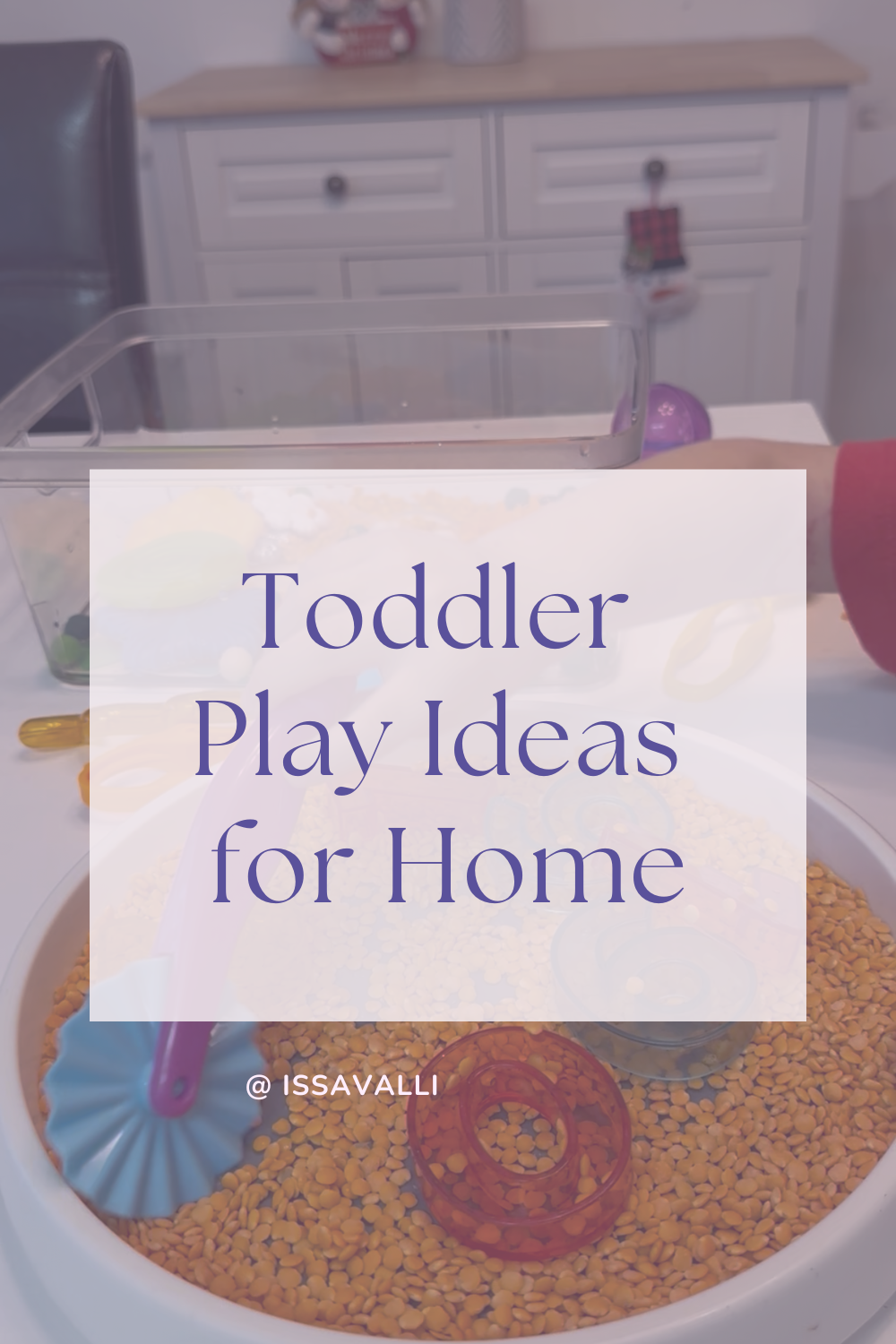
Here are some activities for toddlers at home that keep my toddler entertained while learning. Throughout the week, we focus on activities that build fine motor skills which are essential for writing.
These activities also help build independence. We usually do a mix of sensory bins, prewriting activities like tracing and coloring, and problem-solving like color sorting.
Why I Focus on Independent Play
Independent play is about giving toddlers space to explore, repeat, and play in their own way. My goal isn’t just to keep him busy, although that’s a bonus, but to let him learn and explore.
Independent play doesn’t mean constant activity or perfect focus. What matters most is that the activity lets him play without constant guidance.
It supports fine motor skills, focus, and confidence. It also gives toddlers the chance to follow their own interests instead of rushing from one activity to the next.
I don’t expect long stretches every day. Some days it’s five minutes; other days, it’s much longer. The goal isn’t duration; it’s familiarity and comfort with playing independently.
Sensory Bins
A few months ago, we tried sensory bins and he loves it!
Most of the time he could be doing sensory bins play for over 60 minutes. So this week we did a numbers + lentils sensory play activity.
This is the longest-lasting activity in our house. My toddler will play with a sensory bin for 60 minutes or more.
I like sensory bins because they allow for imaginative play and can be used in different ways. This is the one activity he can spend a lot of time on without getting bored. I usually do sensory bins after breakfast when I know we’re not going out.
He loves scooping, pouring, sorting, and feeling different textures. These tools are a must-have for sensory bins!
These activities work on hand strength, coordination, and early problem-solving—all without feeling like “learning.”
Why I love it:
- Open-ended
- Encourages focus
- Easy to adjust as interests change
Coloring With Dot Markers
We used to do coloring with crayons, but over time, his interest decreased.
These Dot markers are a game-changer. They’re easier to color with, give him more control over the result, and are simple to clean up. He can play with them for over 30 minutes at a time.
There’s no pressure to color “correctly,” which helps him stay relaxed, develop creativity, and focus.
Why I love it:
- Strengthens fine motor skills
- Supports hand-eye coordination
- No instructions needed
Color Sorting Magnets
Fun learning with zero prep.
He can sort by color and match objects.
Why I love it:
- Supports fine motor control without pressure
- No prep time
- Easy to rotate
Stickers
My son loves stickers. He could easily be playing with stickers for more than 30 minutes.
To make it truly independent play, the sticker stamper is a must. Regular stickers require peeling, but stampers let him press stickers into the included activity book and get started right away.
What idependent play Has Taught Me About Play
Independent play doesn’t need to be complicated, and it doesn’t mean your toddler decides everything. It’s okay to offer choices.
Usually, the activities that work best are simple, repeatable, and familiar. When toddlers know what to expect, they settle into play more easily and stay longer.
This approach has helped my toddler build focus, confidence, and fine motor skills at his own pace.
If you’re looking for intentional toddler play that fits into real life, start small. Choose a few activities, rotate them slowly, and let your child lead the way.
How I Rotate Activities
Not every activity is available all the time. Too many options at once can lead to overwhelm or frustration.
Morning baskets are a great way to rotate activities while keeping interest high. Keep favorite activities handy for days when meltdowns are likely, and introduce new activities when your toddler is open to exploring something new.