At my baby’s two-month checkup, the pediatrician had me stand on his left side to see if he would turn toward me. Head control is one of those baby milestones that is easy to take for granted unless something feels off.
That’s how I first learned about congenital torticollis 1, a condition where tight neck muscles make a baby’s head tilt or turn to one side.
My baby tried to look left but couldn’t turn all the way. The doctor explained that he was favoring his right side and recommended physical therapy to help with his neck movement.
Looking back, I realize there were early signs of torticollis in my baby. I just didn’t recognize them at the time.
From the moment we left the hospital, I noticed he always tilted to the right in his car seat, and I was often adjusting his head.
How Torticollis Affects Developmental Milestones
Favoring one side started to create a flat spot on his head and made achieving head control more challenging for him. Head control is an important baby milestone that babies work on during tummy time.
Tummy time builds the neck, back, and shoulder strength babies need for the developmental milestones of rolling, sitting, and crawling
Research 2 shows that babies with torticollis often reach motor milestones later. Main reason? how much tummy time they get.
Motor Developmental Milestones
According to the CDC 3, babies reach motor milestones at different paces, but there are common skills to watch for in the first year. Here’s a month-by-month look at motor developmental milestones in babies.
| Significant Motor Milestones | |
| 2 Months Early Head Control | Around 2 months, many babies start lifting and holding their heads during tummy time. You might notice them looking around more, following faces or objects with their eyes, and moving their arms and legs more intentionally. |
| 4 Months Stronger Neck and Arm Control | By 4 months, babies start holding their heads steadier when you’re holding them and begin pushing up on their forearms during tummy time. You may notice them reaching for toys, bringing their hands to their mouths, and batting at objects as they explore their surroundings. |
| 6 Months Rolling and Sitting | By 6 months, babies usually start rolling from tummy to back and pushing up with straight arms during tummy time. Many begin leaning on their hands for support when sitting, showing clear progress in their motor skills development. This stage is an exciting step in your baby’s milestone journey as they gain more control over their body. These milestones build the strength and stability needed for crawling later. |
| 9 Months Sitting and Hand Skills | By 9 months, most babies can get into a sitting position on their own and sit without support. They can transfer objects from one hand to the other and use their fingers to explore and grab small items. These skills mark important milestones in both coordination and overall motor development. |
| 12 Months First Steps and Fine Motor Growth | Around 12 months, many babies pull up to stand, cruise along furniture, and take their first steps. Their fine motor skills also improve, allowing them to pick up small objects with their fingers and drink from a cup with some assistance. This stage highlights major milestones in both movement and daily independence. Babies usually crawl before pulling up to stand. However, some start walking first and crawl later around 15 months. |
Our Tummy Time Journey
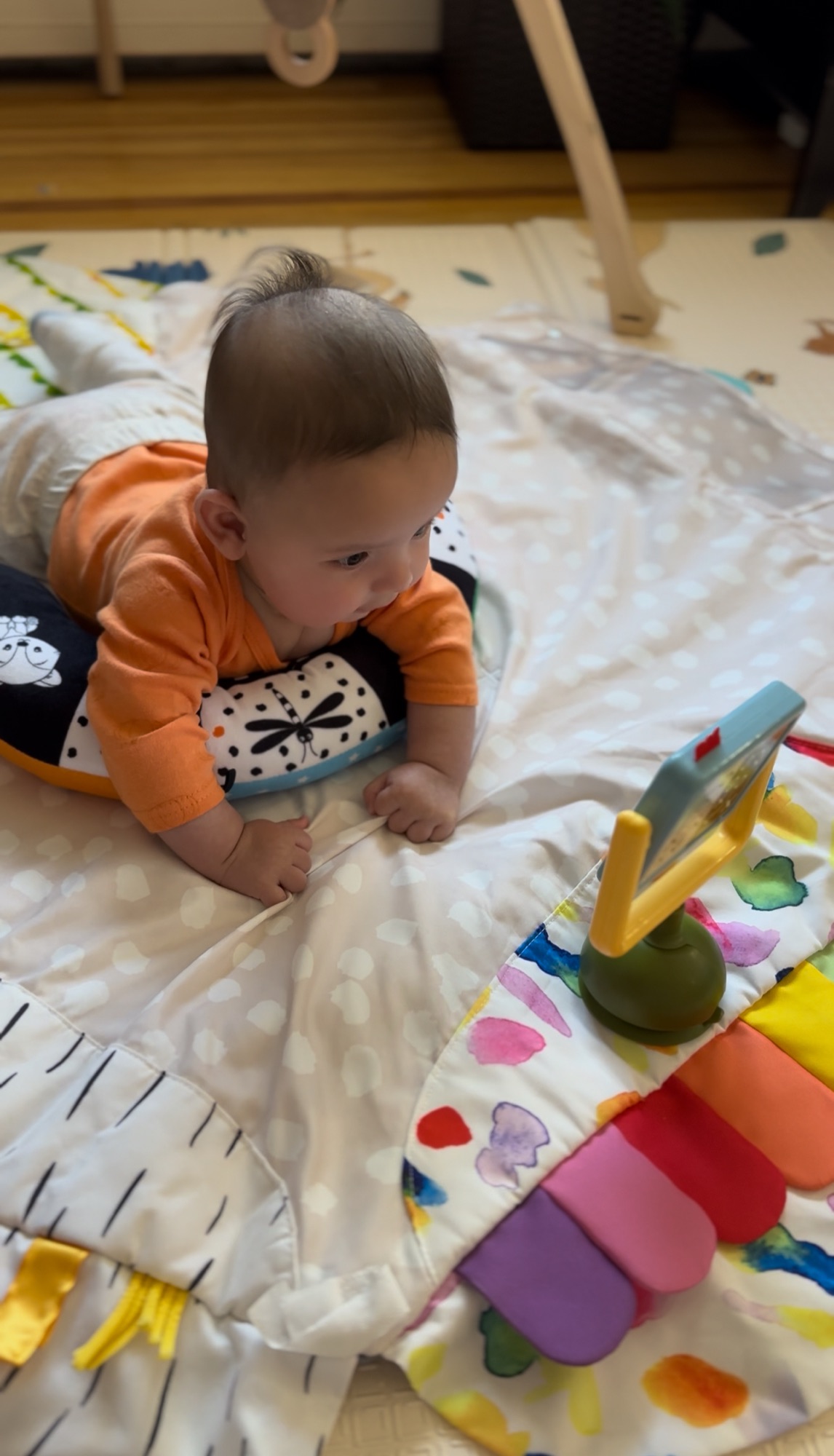
My baby is not a big fan of tummy time. I think most babies aren’t at first. My first son felt the same way, but eventually, he got used to it. This time around, at three months, my baby still lasts only about five minutes before getting fussy.
Every minute really counts at this stage. That is why tracking progress is so helpful for baby milestones, and why I created my baby milestone progress tracker. It helps you notice which skills your baby is working on instead of only focusing on how long they stay on their tummy.
After getting the diagnosis, I became more intentional about tummy time. I encouraged him to turn his head both ways and looked for small ways to make the experience better. My goal was to make every minute count and turn each session into a mini workout that he’d enjoy.
And it paid off!
These simple activities helped with head control and strengthened my baby’s neck muscles. They made tummy time a little easier and more enjoyable over time.
During his first physical therapy visit, the therapist told us his head control was already better than many babies she sees. Hearing that made me feel so relieved. By three months, he was spending more time on his tummy, holding his head up longer, and turning both ways, though he still favors his right side.
Tummy Time Activities for Baby Neck Strength and Head Control
These are the tummy time activities I’m focusing on to help my baby turn his head both ways and build strength in his neck and shoulder muscles.
Face-to-Face Play
About half an hour after feeding, I’d lay him on his belly on the bed, get down at his eye level, and talk to him. Face-to-Face Play keeps him motivated to lift his head and helps build early head control.
When he cries, I pause and comfort him and try again later. Never force it.
Tummy Time Pillow
Once he could hold his head without dropping it suddenly, we added sessions with a tummy time pillow (smaller than a nursing pillow). This pillow helped him push his chest upward, like a mini yoga cobra pose, while strengthening his arms and core. Some websites recommend using the pillow earlier, but it seems to me that if they cannot lift their heads yet, the pillow will make it even harder.
High-Contrast Toys
I use black-and-white rattles and toys to get my baby’s attention and guide him to turn his head both ways.
Baby Safe Mirrors
Babies love looking at their reflection! I use a small mirror (actually from his milestone photoshoot props) to encourage him to keep his head up longer.
Play Gym Toys
The Lovevery play gym provides everything he needs to develop his skills. It’s simple, not overstimulating, and its setup encourages reaching and stretching. He loved batting at the wooden rattle and trying to reach the high-contrast ball.
Elephant Toy Hook
Coordination and reaching. Hanging toys at different angles encouraged him to reach to both sides, not just straight ahead.
Side-lying play
His physical therapist suggested adding short sessions with him lying on his side to help both sides of his neck work evenly. It’s also a great position to encourage rolling, especially for babies who are not fans of tummy time.
Daily Hacks To Support His Development
It’s amazing how much our daily setup affects head positioning. The way we placed our baby in his crib, bassinet, and play yard made him naturally turn to the right to look for us. So I started switching the direction he sleeps in, which encouraged him to turn left to find us.
Having my toddler stand on my baby’s left side and offer him toys also helps. It keeps our baby looking that way for a few minutes and feels like play for him not therapy. Plus, it’s such a sweet way to build their sibling bond.
What I Learned About Baby Milestones
As a mom of two, I’ve learned that tummy time alone isn’t enough. Most of us know we should be doing it, but I didn’t realize at first how much our interaction during those minutes really matters. Instead of waiting for the milestone to happen, we can guide them by using toys, mirrors, or even our faces to help them move and make progress.
Being intentional, instead of just watching the clock helps focus on practicing the movements that actually build their strength and help them reach each milestone.
It’s amazing how much these small, guided moments add up, and how rewarding it feels to see him reach each milestone, one little movement at a time.
I’ll keep sharing updates as my little one reaches new milestones. Follow along if you’d like to see more of our little adventures!
Baby Milestone Progress Tracker
Tracking your baby’s motor milestones helps you see how they are developing neck strength and coordination. This simple milestone progress tracker makes it easy to notice what skills your baby is achieving and what to expect as they grow during those first few months.
Remember, timing and order of milestones can vary. What matters most is steady progress.
This post is based on my personal experience and research. I’m not a medical professional, and every baby develops at their own pace. Always follow your pediatrician’s advice, and remember to practice supervised tummy time.
Reference
1 Health360 (2025). Infant Torticollis: What Parents Should Know About Signs & Treatment. https://intermountainhealthcare.org/blogs/infant-torticollis
2 Ohman, A., Nilsson, S., Lagerkvist, A. L., & Beckung, E. (2009). Are infants with torticollis at risk of a delay in early motor milestones compared with a control group of healthy infants?. Developmental medicine and child neurology, 51(7), 545–550. https://pubmed.ncbi.nlm.nih.gov/19191832/
3 Centers for Disease Control and Prevention. CDC’s Developmental Milestones. https://www.cdc.gov/act-early/milestones/index.html