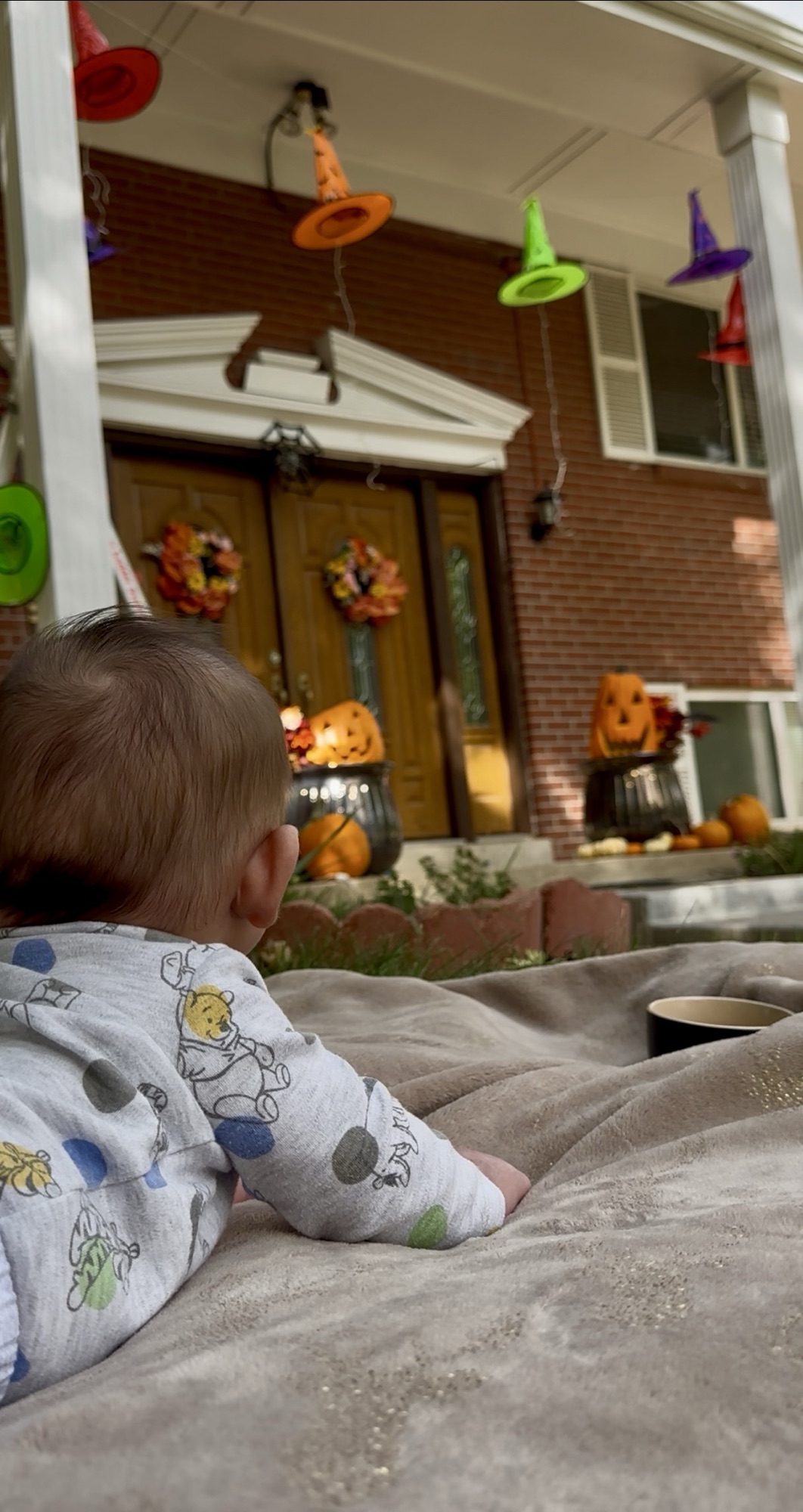
At my baby’s four-month checkup, the pediatrician pulled him to sit. This is usually a way to see if he’s ready to start solids. While he got the green light, I’m not in a rush to start just yet.
From my experience with my toddler, starting solids early can be a long, messy path of exploring textures, which I’m not ready for.
I do want to introduce foods that encourage bonding with his older brother. Yogurt has been cleared at six months, and since his brother loves cream of wheat, I might introduce that a little sooner. These meals will be made with breastmilk or formula, which adds to the already busy schedule of caring for both kids.
My baby’s tummy time routine has changed a lot since those early newborn days. If you’re just starting out, check out my post on how to help your baby hold their head up — it’s full of gentle ways to build strength early on.
Rolling Over
Right now, my baby is very close to rolling over. I’ve noticed that when he’s on his back, he curls his legs in and tilts to one side. One of the movements I track in my milestone progress tracker.
Should I keep track of how much time my baby does tummy time?
Many mamas wonder about this. You’ll find plenty of sources that say exactly how long babies should spend on tummy time each month, but the truth is, every baby is different. Some babies love it, others not so much. There are plenty of other activities that also help build neck strength and motor skills.
With my first, I didn’t track minutes; I tracked the number of tummy time sessions per day. For reference, my toddler took his first steps at 10 months.
Tummy Time Guidelines (Approximate)
Newborn: 2–3 minutes, 2–3 sessions per day
2 months: 20–30 minutes total per day
3 months: up to 1 hour total per day
4–6 months: 1–2 hours per day
6 months and beyond: more than 2 hours per day
The key is progress, not perfection. Many activities help develop motor skills: side-lying play, hand-eye coordination exercises, reaching for toys, and more.
Tracking Progress Towards Milestones
Tracking progress helps you know what your baby is working toward, rather than just counting minutes. You become an active participant in your baby’s development.
Physical Development Milestones
These are some of the common motor milestones to look for in babies (based on CDC guidelines). Remember, every baby moves at their own pace, and it’s completely normal if some milestones take a little longer. If you have any concerns, consult your pediatrician for reassurance and guidance.
2 months: Hold their head up during tummy time
4 months: Pushes up onto forearms and holds their head steady during tummy time
6 months: Rolls from tummy to back, pushes up with straight arms when on tummy, and leans on their hands for support while sitting
The biggest impact is to give your little one a variety of activities during their wake windows. Activities that contribute to developing motor skills and achieving milestones include side laying, hand-eye coordination. When you measure progress you know what you are looking to work towards rather than just spending time on a position. You become an active member of the progress.
As a second-time mom, I don’t think strict schedules are necessary for either my baby or me. Variety and engagement during wake windows make the biggest impact.
Milestone Tracker Apps I’ve Tried
I know many moms like having a simple way to track progress, so I tried out a couple of free apps that can make it easier to verify your baby is meeting their milestones.
CDC Milestone Tracker
This one is a straightforward checklist of baby milestones. It’s great for getting a clear picture of what skills to look for each month, but it doesn’t include a tummy time timer or activity suggestions. It’s very basic, which might be enough if you just want a quick reference.
Pathways.org Milestone Tracker
This app goes a step further. It has a built-in tummy timer, keeps a history of your sessions, and even gives ideas for easy daily activities to support your baby’s development. You’ll also find milestone-specific exercises and play ideas, which make it both fun and educational. Out of the two, this one is the most thorough for keeping your baby on track with their motor milestones.
I recommend using either of these apps alongside my milestone progress tracker to get a fuller picture of your baby’s motor development. The tracker helps you focus on progress, not just numbers—so you can celebrate every little step forward.